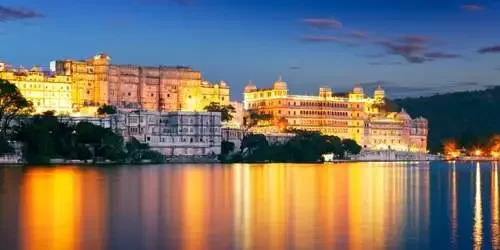
20 Days Gujarat Rajasthan Tour from Mumbai
1620AT4
The Journey Blueprint
| Duration | 19 Nights / 20 Days |
| Route | Mumbai → Nashik → Vadodara → Statue of Unity → Ahmedabad → Udaipur → Jodhpur → Jaisalmer → Bikaner → Jaipur → Agra → Delhi |
| Travel Style | Multi-State Regional Circuit, Living Fortresses & Desert Dunes, Modern World-Record Memorials, Wine Tourism & Sacred Ghats, Classic Golden Triangle Heritage |
| Pace | Fast |
| Best Time to Go | November to February |
| Starting Price | INR 70500 |
The 20 Days Gujarat Rajasthan Tour from Mumbai is a grand and diverse journey that beautifully combines coastal charm, cultural heritage, spiritual experiences, royal architecture, and desert landscapes, offering a complete exploration of Western and North India. This tour begins from Mumbai, the vibrant financial capital of India, and continues through Gujarat’s culturally rich cities and spiritual destinations, along with Rajasthan’s iconic royal towns and finally the historic capital city of Delhi.
The tour also includes iconic highlights such as the Statue of Unity, camel rides over the sand dunes of Jaisalmer, and a sunrise visit to the Taj Mahal in Agra, along with a detailed exploration of Delhi’s historic and modern landmarks. With a mix of scenic drives, guided sightseeing, spiritual visits, and cultural interactions across multiple states, this journey provides a truly immersive and unforgettable travel experience.
Destinations Covered: Mumbai, Nashik, Vadodara, Ahmedabad, Udaipur, Jodhpur, Jaisalmer, Bikaner, Jaipur, Agra, Delhi
Tour Itinerary:
Day 01: Mumbai:
On arrival at Mumbai airport or railway station, you will be met and assisted for your transfer to the hotel. After check-in and a short rest, head to Marine Drive, also known as the “Queen’s Necklace,” for an evening stroll. Enjoy the cool sea breeze and the glittering lights of the bay, followed by a visit to the iconic Gateway of India to see it beautifully illuminated at night. Overnight at Mumbai.
Day 02: Mumbai:
After breakfast, spend the day exploring the “City of Dreams.” Visit the Gateway of India, the Prince of Wales Museum, and Mani Bhavan, associated with Mahatma Gandhi. Drive past the High Court and University buildings, and stop for photos at the Dhobi Ghat. Later, visit the ISKCON Temple and the colorful markets of Colaba Causeway before returning to your hotel. Overnight at Mumbai.
Day 03: Nashik:
After breakfast, check out and drive towards Nashik, the wine capital of India and a major pilgrimage site. Arrive by afternoon and check in to your hotel. Later, visit the Panchavati area, including Kalaram Temple and Sita Gufa, situated on the banks of the holy Godavari River. You may also visit one of the famous local vineyards to learn about Indian viticulture. Overnight at Nashik.
Day 04: Vadodara:
Leave Nashik for Vadodara after breakfast. Upon arrival in the cultural capital of Gujarat, check in to your hotel. The rest of the day is free for leisure or self-exploration. You may choose to relax at the hotel or walk through the local markets to experience the city’s vibrant atmosphere. Overnight at Vadodara.
Day 05: Vadodara:
After breakfast, proceed for a day trip to the Statue of Unity, the world’s tallest statue dedicated to Sardar Vallabhbhai Patel. Spend the day exploring the viewing gallery, the valley of flowers, and the laser show in the evening. The site offers magnificent views of the Sardar Sarovar Dam and the surrounding Narmada River landscape. Return to Vadodara by evening. Overnight at Vadodara.
Day 06: Ahmedabad:
After breakfast, begin half-day sightseeing of Vadodara, visiting the magnificent Laxmi Vilas Palace and the Maharaja Fateh Singh Museum. Later, drive towards Ahmedabad. Upon arrival, check in to your hotel. The evening is free to visit the Law Garden night market, famous for traditional Gujarati handicrafts and street food. Overnight at Ahmedabad.
Day 07: Ahmedabad:
Today’s schedule covers the rich heritage of Ahmedabad. Visit the Sabarmati Ashram, the Siddi Sayyed Mosque with its famous stone lattice work, and the Hutheesing Jain Temple. In the afternoon, drive to Gandhinagar to visit the grand Akshardham Temple. Explore its beautifully carved pavilions and stay for the mesmerizing water and light show in the evening. Overnight at Ahmedabad.
Day 08: Udaipur:
After breakfast, drive towards the “City of Lakes,” Udaipur. Upon arrival and check-in, begin a short city tour visiting the City Palace and Jagdish Temple. In the evening, enjoy a relaxing boat ride on Lake Pichola, offering calm views of the Lake Palace and Jag Mandir as the sun sets over the water. Overnight at Udaipur.
Day 09: Jodhpur:
Check out and drive towards the Blue City of Jodhpur. Enroute, stop to admire the incredible marble architecture of the Ranakpur Jain Temples and the massive, impenetrable walls of Kumbhalgarh Fort. Arrive in Jodhpur by late afternoon and check in to your hotel. Overnight at Jodhpur.
Day 10: Jodhpur:
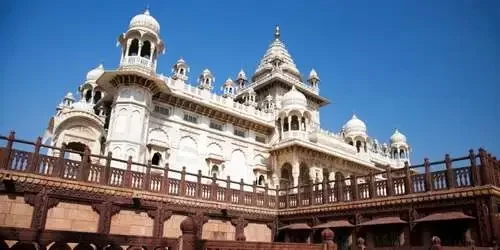
After breakfast, embark on a full-day city tour. Visit the Majestic Mehrangarh Fort, exploring its every nook and corner. We also visit Jaswant Thada, a royal white marble cenotaph, and the Umaid Bhawan Palace Museum. Spend the evening exploring the iconic Clock Tower and the traditional markets. Overnight at Jodhpur.
Day 11: Jaisalmer:
After breakfast, drive towards Jaisalmer. Enroute, visit the ancient trading town of Osian, known for its beautifully sculpted Hindu and Jain temples. Arrive in the Golden City by late afternoon. At sunset, visit Gadisar Lake and Vyas Chhatri for a peaceful view of the golden sandstone structures glowing in the evening light. Overnight at Jaisalmer.
Day 12: Jaisalmer:
After breakfast, begin sightseeing in Jaisalmer. Visit the living Jaisalmer Fort, the Jain Temples, and the grand Patwon Ki Haveli and Nathmal Ki Haveli. By evening, head to the Sam Sand Dunes for an Arabian Night experience. Enjoy a photogenic sunset on camel back, followed by an overnight stay in tented accommodation with a traditional cultural program. Overnight at Desert Camp.
Day 13: Bikaner:
After an early breakfast, check out and drive to the desert city of Bikaner. Upon arrival and check-in, explore the Junagarh Fort, a rare fort not built on a hill. Visit the Bhandasar Jain Temple and the Camel Breeding Farm, where you can see different breeds of camels and learn about their importance in desert life. Overnight at Bikaner.
Day 14: Jaipur:
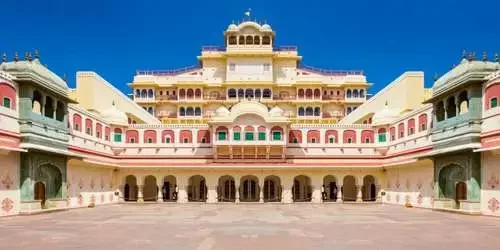
Leave Bikaner for the Pink City of Jaipur after breakfast. Upon arrival and check-in, visit Jaipur’s modern landmarks, including the Albert Hall Museum, Statue Circle, and the stunning Birla Mandir. Later, visit the Patrika Gate, famous for its vibrant hand-painted walkways. Overnight at Jaipur.
Day 15: Jaipur:
After breakfast, spend the day exploring the heritage of Jaipur. Visit the hilltop Amber Fort and Palace, known for its grand architecture and detailed interiors. Pass by Jal Mahal, set in the middle of the lake. Continue to the local bazaars, Hawa Mahal, City Palace, and Jantar Mantar, reflecting Jaipur’s royal past. Overnight at Jaipur.
Day 16: Agra:
After breakfast, drive towards Agra. Enroute, visit the ancient stepwell of Abhaneri and the deserted Mughal city of Fatehpur Sikri, known for the Buland Darwaza and the tomb of Salim Chishti. Arrive in Agra by late afternoon and check in to your hotel. Overnight at Agra.
Day 17: Agra:
Start your day with a sunrise visit to the Taj Mahal, the world’s most famous monument of love. After breakfast, visit the massive Agra Fort and the Tomb of Itmad-ud-Daulah. In the evening, visit Mehtab Bagh for a stunning view of the Taj Mahal from across the Yamuna River. Overnight at Agra.
Day 18: Delhi:
After breakfast, drive back to the capital city, Delhi. Upon arrival and check-in, visit the grand Akshardham Temple to admire its traditional stone carvings and peaceful gardens. Spend your evening at leisure or exploring the local markets for souvenirs. Overnight at Delhi.
Day 19: Delhi:
After breakfast, enjoy a full-day city tour. Visit the historic Red Fort and Jama Masjid in Old Delhi, followed by a visit to Raj Ghat. In the afternoon, explore India Gate, Humayun’s Tomb, and the Qutub Minar. Drive through the Diplomatic Enclave and past the Parliament House. Overnight at Delhi.
Day 20: Delhi Departure:
After breakfast, check out from the hotel. At the scheduled time, you will be transferred to Delhi airport or railway station for your onward journey. (The Tour Ends)
Package Options:
Comfort
Clean stays with essential modern amenities.
Perfect For: Value-conscious travelers on a practical budget.
Pricing (Per Person):
- 02 Pax: INR 90,100
- 04 Pax: INR 76,900
- 06 Pax: INR 70,500
Premium
Upscale to 4-Star hotels with superior services.
Perfect For: Travelers seeking comfort and a touch of luxury.
Pricing (Per Person):
- 02 Pax: INR 1,10,000
- 04 Pax: INR 96,600
- 06 Pax: INR 90,300
Luxury
World-class 5-star hotels with top-tier service.
Perfect For: Travelers seeking elevated luxury & finest hospitality.
Pricing (Per Person):
- 02 Pax: INR 1,78,000
- 04 Pax: INR 1,64,000
- 06 Pax: INR 1,58,000
Heritage Boutique
Restored heritage homes with unique charm.
Perfect For: Culture lovers wanting an intimate, local vibe.
Pricing (Per Person):
- 02 Pax: INR 1,33,000
- 04 Pax: INR 1,20,000
- 06 Pax: INR 1,13,000
Heritage Grand
Grand palaces and forts turned lavish hotels.
Perfect For: Travelers craving true royal grandeur and scale.
Pricing (Per Person):
- 02 Pax: INR 2,42,000
- 04 Pax: INR 2,28,000
- 06 Pax: INR 2,22,000
Leisure Resorts
Premium resorts designed for a relaxing getaway.
Perfect For: Families and couples wanting a complete resort.
Pricing (Per Person):
- 02 Pax: INR 1,36,000
- 04 Pax: INR 1,23,000
- 06 Pax: INR 1,16,000
Note:
- Tour Prices are Per Person.
- Package Cost may change during the fairs & festivals time.
- Above Tour Rates are in Indian Rupees.
- Comfort – 2 & 3 Star Hotels, Premium – 4 Star Hotels, Luxury – 5 Star Hotels, Heritage Grand – Large Palaces & Forts, Heritage Boutique – Small Historical Homes, Leisure Resorts – Relaxing Resorts with Activities.
Package Inclusions:
- 19 Night / 20 Days Air-Conditioned Accommodation on twin sharing basis.
- Daily breakfast.
- All Sightseeing and transfers by Air-Conditioned Car.
- Driver allowances, fuel, parking charges, toll taxes and interstate taxes.
- Boat Ride over Lake Pichola, Udaipur.
- Desert Camp Stay includes Camel Ride, Hi-Tea, Bonfire, Cultural Programs and Veg Dinner.
- Local Guide Service during Udaipur, Jodhpur, Jaisalmer, Jaipur, Agra & Delhi Sightseeing.
- Child below 5 years is complimentary (without extra bed).
Package Exclusions:
- Meals & drinks other than specified in inclusions.
- Expenses of personal nature such as portages, tips, telephone calls, laundry expenses etc.
- All entrances, camera fees, guide & driver tipping.
- Insurance Cover.
- Any air/train/bus fare
Query for 20 Days Gujarat Rajasthan Tour from Mumbai - 1620AT4
16-20 Days Rajasthan Tours

Itinerary: Jaipur, Ajmer, Pushkar, Bundi, Bijoliyan, Menal, Bassi, Eklingji, Nagda, Udaipur, Mount Abu, Kumbhalgarh, Ranakpur, Ghanerao, Jodhpur, Osiyan, Jaisalmer, Kheechan, Bikaner, Mandawa, Laxmangarh, Nawalgarh, Mukundgarh, Jaipur

Itinerary: Jaipur, Bikaner, Jaisalmer, Jodhpur, Udaipur, Mount Abu, Ahmedabad, Jamnagar, Dwarka, Somnath, Diu, Gir, Bhavnagar, Ahmedabad
Itinerary: Delhi, Amritsar, Haridwar, Rishikesh, Delhi, Agra, Jaipur, Ranthambore, Udaipur, Jodhpur, Jaisalmer, Bikaner, Jaipur
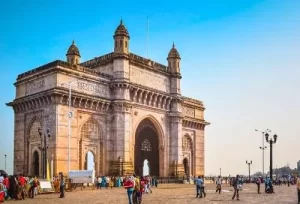
Itinerary: Mumbai, Nashik, Vadodara, Ahmedabad, Udaipur, Jodhpur, Jaisalmer, Bikaner, Jaipur, Agra, Delhi
FAQs related to 20 Days Gujarat Rajasthan Tour from Mumbai
What makes the physical layout of Mumbai's Marine Drive and the Gateway of India geographically distinct?
What is the geographic and religious significance of Nashik's Panchavati area?
How does the scale of Vadodara’s Laxmi Vilas Palace compare to other royal monuments in India?
What unique architectural feature defines the Siddi Sayyed Mosque in Ahmedabad?
Why is Kumbhalgarh Fort considered an absolute titan in defensive military engineering?
Why was the location of Fatehpur Sikri abandoned by the Mughal Empire so shortly after its construction?
Curated Rajasthan Tours